
We all have a default conversation mode. But do you know yours?
Think about your last five conversations. Were you asking deep questions or sharing surface-level updates? Were you genuinely curious about the other person, or mostly focused on your own stories?
Most of us have a conversation comfort zone—a default style we slip into without thinking. And while there's nothing wrong with having a natural tendency, staying stuck in one mode can limit the depth and quality of our connections.
That's where the Conversation Audit Matrix comes in.
The Four Conversation Types
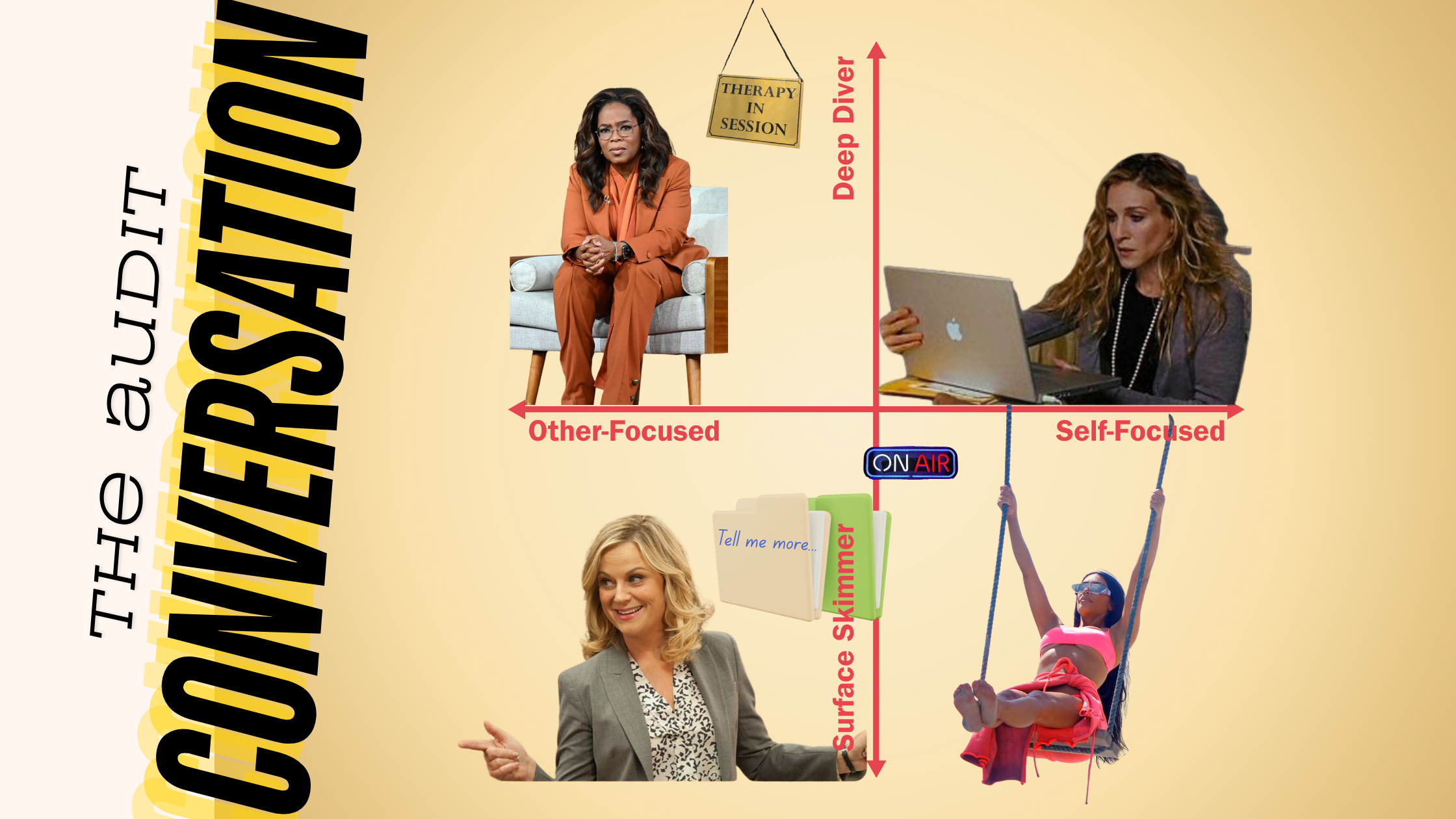
The matrix maps conversation styles across two axes:
X-axis: Surface Skimmer → Deep Diver
Y-axis: Self-Focused → Other-Focused
This creates four distinct conversation archetypes, each with its own strengths, blind spots, and cultural references that help us recognize them in action.
The Wisdom Weaver (Other-Focused + Deep Diver)
Character Reference: Oprah's interview style | Mr. Rogers' gentle curiosity | The therapist from "In Treatment"
Signature Phrase: "That reminds me of something you said last month about..."
What they talk about: Philosophy, dreams, fears, growth, meaningful memories, values exploration
Example:
"I've been thinking about what you shared regarding your relationship with your father, and I wonder if that connects to why you're drawn to mentoring younger people?" - Therapist, 34
Their superpower: They create space for profound self-discovery. Conversations with them feel like therapy sessions (in the best way).
Red flags they avoid: Giving unsolicited advice, making conversations about themselves, rushing to solutions
The shadow side: Can sometimes feel too intense for casual settings. May exhaust people who just want to chat about their day.
The Empathy Bridge (Other-Focused + Surface Skimmer)
Character Reference: Leslie Knope's enthusiastic care | Golden Girls' Dorothy checking in | Ellen's warm energy
Signature Phrase: "How was your day? Tell me everything!"
What they talk about: Daily events, feelings check-ins, plans, social updates, encouragement, light problem-solving
Example:
"I know you had that big presentation today - I've been thinking about you! How did it go?" - Elementary teacher, 28
Their superpower: They make people feel cared for in everyday moments. They're the glue that holds communities together.
Red flags they avoid: Dismissing others' problems as "no big deal," changing subjects when others open up
The shadow side: Can avoid depth when difficult emotions arise. May struggle with boundary-setting because they care so much.
The Story Spotlight (Self-Focused + Deep Diver)
Character Reference: Carrie Bradshaw's introspective monologues | Matthew McConaughey's philosophical musings | Phoebe Buffay's bizarre but touching connections
Signature Phrase: "That's exactly like when I..."
What they talk about: Personal revelations, past experiences, internal struggles, creative projects, philosophical musings
Example:
"Your breakup story totally reminds me of my divorce three years ago. Let me tell you what I learned about myself..." - Artist, 31
Their superpower: They model vulnerability and deep self-reflection. Their stories can inspire others to go deeper.
Red flags they avoid: Making every story about them, not asking follow-up questions about others
The shadow side: Can inadvertently hijack conversations. May connect everything back to their own experience rather than staying curious about others.
The Highlight Reel (Self-Focused + Surface Skimmer)
Character Reference: Gaston's self-promotion | Kardashian energy | Ryan Seacrest's entertainment focus
Signature Phrase: "Wait until you hear what happened to me today!"
What they talk about: Daily adventures, achievements, social events, purchases, plans, complaints, gossip
Example:
"So I'm at Starbucks this morning and you won't believe what the barista said to me..." - Sales rep, 26
Their superpower: They bring energy and entertainment. Life feels exciting around them.
Red flags they avoid: Dominating conversations, one-upping others' stories, not listening when others speak
The shadow side: Can leave others feeling unheard or invisible. Relationships may stay surface-level indefinitely.
Taking Your Conversation Audit
Ready to discover your default mode? Ask yourself:
Why This Matters
Here's the thing: all four styles have value.
The Wisdom Weaver creates transformation. The Empathy Bridge builds community. The Story Spotlight models vulnerability. The Highlight Reel brings joy and energy.
But if you only operate in one quadrant, you're missing out on:
The goal isn't to change who you are, but to expand your range.
How to Stretch Beyond Your Default
If you're a Wisdom Weaver: Practice small talk without turning it into therapy. Sometimes people just want to chat about their weekend.
If you're an Empathy Bridge: Push yourself to go one level deeper. When someone shares something, ask "How did that make you feel?" instead of moving to the next topic.
If you're a Story Spotlight: Count to five before sharing your related story. Ask two follow-up questions first.
If you're a Highlight Reel: Pause after sharing your story and genuinely ask, "What's been going on with you?" Then actually listen.
The Bottom Line
Your conversation style isn't fixed. It's a habit—and habits can evolve.
The most connected people aren't stuck in one quadrant. They move fluidly depending on what the moment needs.
Sometimes that's deep wisdom. Sometimes it's cheerful check-ins. Sometimes it's vulnerable storytelling. Sometimes it's pure entertainment.
Connection isn't about being perfect. It's about being present, flexible, and intentional.
So take your audit. Find your default. Then practice stretching into the other quadrants.
Because the richest relationships are built by people who can dance across all four.
Which quadrant do you live in? And which one will you explore next?
.svg)